Welcome to Shanghai Ruitai Electric Insulator Co.,Ltd
What are the functions of pillar insulators and the problems that exist?
2025-12-14 5:18:58
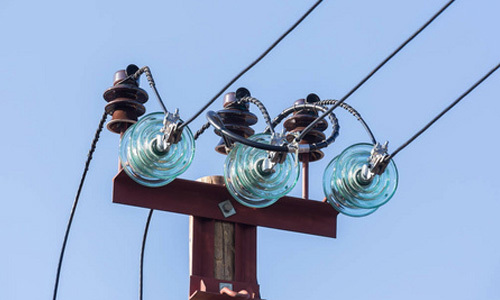
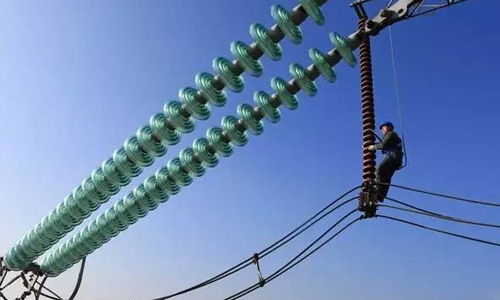
The end of the high-voltage power line connecting tower is hung with many disc-shaped insulators, which are designed to increase the creepage distance, usually made of glass, ceramic, or rubber, called insulators. To prevent floating dust and other dirt from adhering to the surface of the insulator, forming a path that can be broken down by flashover at both ends of the insulator, that is, creepage. Therefore, the surface distance is increased, that is, the creepage distance, which is the distance of discharge along the insulating surface, is called the leakage distance. Creepage distance = surface distance / system high voltage. Depending on the degree of pollution, heavily polluted areas generally use a creepage distance of 31 millimeters per kilovolt.
Zero-value insulators refer to insulators whose potential distribution at both ends is close to zero or equal to zero during operation.
The impact of zero-value or low-value insulators: The insulation of the line conductor depends on the insulator. Due to manufacturing defects or external influences, such as: the surface of the insulator being too dirty, lightning strikes, etc. The insulation performance of the insulator will continuously deteriorate. When the insulation resistance decreases or is zero, it is called a low-value or zero-value insulator. Insulators are smooth, which can reduce the capacitive effect between wires to minimize current loss.
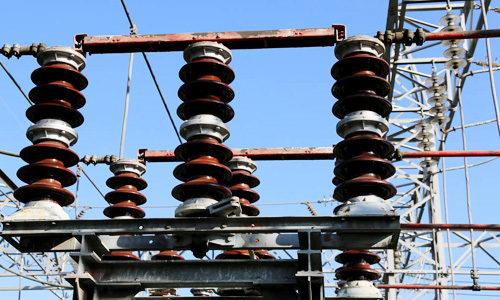
With the construction of ultra-high voltage AC and DC lines in our country and the continuous improvement of mechanical strength requirements, the problems of pure ceramic post insulators are becoming increasingly prominent, especially in ultra-high voltage DC converter stations.
â‘ External insulation issues. With the deterioration of the operating environment, the pollution flashover resistance of ceramic post insulators is insufficient. For ultra-high voltage DC, pure ceramic post insulators require a large creepage distance and structure, while excessively high post insulators are difficult to achieve strong bending and seismic strength.
â‘¡ Earthquake resistance issues. High-voltage equipment using ceramic post insulators as insulating components, referred to as ceramic-type high-voltage equipment, has always had difficulty in solving seismic issues. In the 2008 Wenchuan earthquake, most of the damage to high-voltage equipment was due to the breakage of ceramic sleeves. For ultra-high voltage DC systems, the post insulators used for smoothing reactors require an overall height of 12m and a supporting mass of 40t, while the converter station is located in Yunnan Chuxiong, an area prone to earthquakes, making it **difficult for ceramic post insulators to meet seismic requirements.
â‘¢ Manufacturing quality issues. The manufacturing of ceramic post insulators is very difficult due to its complex process, equipment conditions, and raw material quality issues. The original * Power Company Transmission and Distribution Operation Department High Voltage Post Ceramic Insulator Accident Investigation Working Group, based on extensive research, statistically analyzed the accident situation of ceramic post insulators according to technical reasons and concluded that the majority of the breakage of post ceramic insulators is due to product quality issues.
Related News
Characteristics of Composite Insulator Structure
2025-12-14 5:16:13
What are the seven main characteristics of zinc oxide surge arresters?
2025-12-14 5:17:39
A Brief Discussion on the Advantages of Composite Insulators
2025-12-14 5:20:04


Please leave your contact information to us and we will contact you within 24 hours.